

 Image 1 of 1
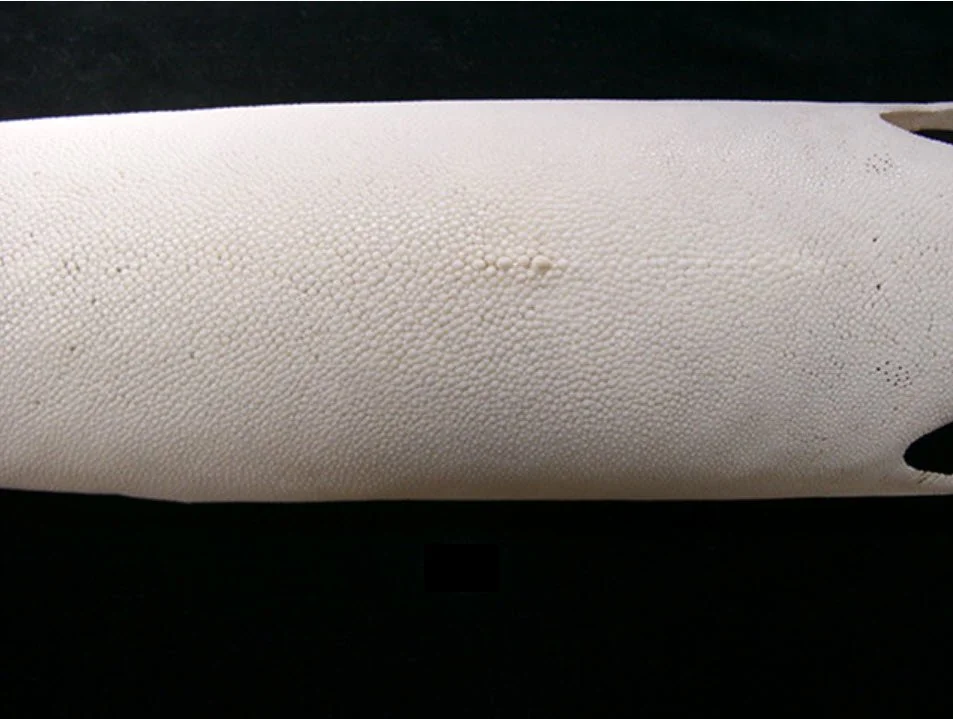
Samegawa is the ray skin that sits beneath the wrap. It’s an extremely resilient material and the rough surface of a quality skin helps to hold the wrap in place.
Sword manufacturers will often save money on their production costs by using the cheapest possible grade of samegawa, or even substituting it for a cheap plastic. An undiscerning public won’t know the difference, but sword practitioners and aficionados will notice immediately.
Samegawa can only be replaced when your tsuka is unwrapped, so this is the perfect time to order this add-on service. I’ll upgrade your samegawa to a crisp, white, high-quality ray skin that will complement a quality wrap perfectly and show the sword world that you care about the details.
I offer three colors:
White: the classic choice that best shows off the texture and quality of the samegawa.
Black: another traditional choice, black samegawa helps the ito to “pop” against the dark background and puts more attention on the wrap itself. Functionally, it has the same durability and functionality.
Antiqued: antiqued samegawa takes on a more aged, slightly brownish hue. It is not antique, but rather is colored to look that way. Functionality and durability is not affected in any way. It is simply an aesthetic choice.
A note:
I’m not doing full wrap samegawa right now, only panels.
Samegawa is the ray skin that sits beneath the wrap. It’s an extremely resilient material and the rough surface of a quality skin helps to hold the wrap in place.
Sword manufacturers will often save money on their production costs by using the cheapest possible grade of samegawa, or even substituting it for a cheap plastic. An undiscerning public won’t know the difference, but sword practitioners and aficionados will notice immediately.
Samegawa can only be replaced when your tsuka is unwrapped, so this is the perfect time to order this add-on service. I’ll upgrade your samegawa to a crisp, white, high-quality ray skin that will complement a quality wrap perfectly and show the sword world that you care about the details.
I offer three colors:
White: the classic choice that best shows off the texture and quality of the samegawa.
Black: another traditional choice, black samegawa helps the ito to “pop” against the dark background and puts more attention on the wrap itself. Functionally, it has the same durability and functionality.
Antiqued: antiqued samegawa takes on a more aged, slightly brownish hue. It is not antique, but rather is colored to look that way. Functionality and durability is not affected in any way. It is simply an aesthetic choice.
A note:
I’m not doing full wrap samegawa right now, only panels.